
Finding a credit card application denied message in your inbox is a discouraging moment that many people face today. I know the frustration of having your financial plans paused by a sudden rejection from a Lender / Issuers. However, 2026 brings new transparency through the adverse action notice, which serves as your personal roadmap for recovery.

This document details exactly why your financial profile did not meet the specific requirements of the bank. Instead of feeling defeated, I suggest reviewing your credit report to identify areas for growth. Understanding these mechanical decisions is the first step toward correcting inaccuracies and securing a future approval that works for you.
Understanding the “Adverse Action Notice” After a Denial
You will receive an adverse action notice within thirty days of your failed application by mail or email. This document is a legal requirement that explains exactly why the Lender / Issuers rejected your specific credit request. I suggest reviewing your credit report to find the specific Credit Bureau that provided the data for this decision.
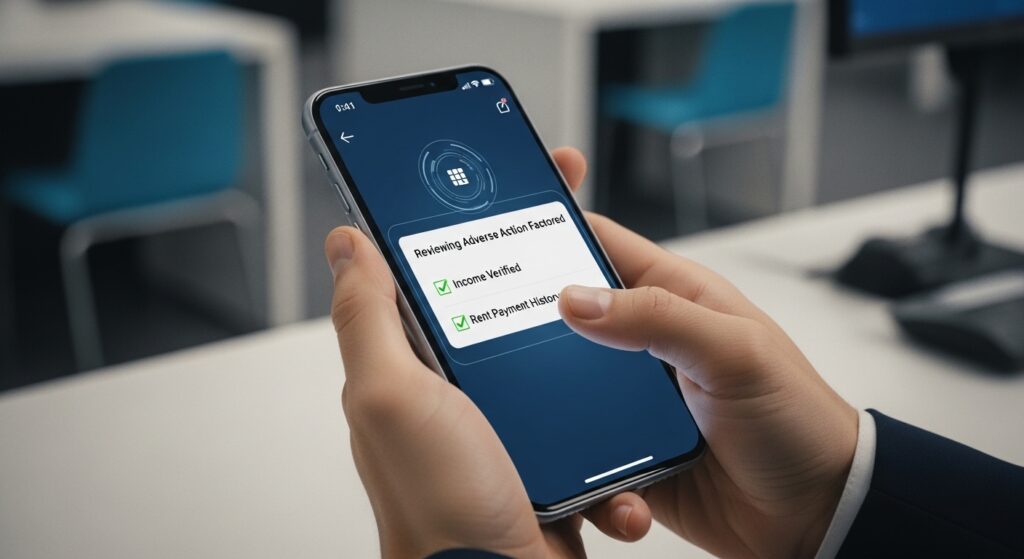
The notice acts as a roadmap for correcting inaccuracies that might be dragging your current score down today. It lists the main reasons for the denial such as a high debt-to-income ratio (DTI) or late payments. You can use this information to assess your creditworthiness and make a better plan for your next attempt.
1. Your Credit Score Falls Below the Minimum Requirements
Many people find their credit card application denied because their score does not meet the strict eligibility requirements. Most Lender / Issuers use automated systems to scan your profile for specific numbers before they offer an approval. If your score is too low the computer will trigger an automatic denial to protect the bank.

Your score is calculated by looking at your payment history and how much revolving debt you currently owe. Serious issues like a past bankruptcy or accounts in collections will stay on your report for many years. I recommend lowering your credit utilization to show that you can manage your available funds with great care.
2. Insufficient Income and High Debt-to-Income (DTI) Ratio
The Lender / Issuers must verify that you have enough gross income to pay back the money you borrow. If your household income is too low for a specific Citi® credit card you may face a rejection. They also look at your debt-to-income ratio (DTI) to see how much of your pay goes to bills.

A high debt-to-income ratio (DTI) suggests that you are already struggling to manage your current monthly financial obligations. Most lenders prefer a financial profile where your total debt stays below thirty-six percent of your total monthly earnings. I suggest you make on-time payments to reduce your debt before you decide to submit an application.
3. Limited or No Credit History (The “Thin File” Problem)
You might face a credit card application denied result if the Credit Bureau has no data on you. This “thin file” makes it very difficult for a Lender / Issuers to predict your future behavior or risk. Young people often need to establish a credit score by starting with very small and simple financial products.

I know it feels impossible to start but you can build credit history responsibly using specialized starter cards. You should look for cards that have low eligibility requirements specifically designed for those with a limited credit history. These tools help you build a solid financial profile so you can qualify for better offers later.
4. Too Many Recent Hard Inquiries in a Short Period
Every time you apply for a loan it creates a hard credit inquiry on your official credit file. If you have too many inquiries in a short time it looks like you are in financial trouble. This behavior often leads to an automatic denial because the lender fears you are taking on too much.

I recommend using a pre-qualification tool to see your odds without any damage to your current credit score. This process uses a soft inquiry which allows you to check if you’re preapproved before you take any risk. It is the best way to improve your chances of approval while searching for a card.
5. Errors and Mismatches on Your Credit Card Application
A simple typo on your Social Security number can lead to a credit card application denied result instantly. If the information you provide does not match the records at the Credit Bureau the bank will stop. These small inaccuracies are seen as a security risk by the modern automated systems used by most banks.

You should always double-check your name and address before you click the button to submit an application today. Make sure your gross income includes all sources like public assistance / alimony or even your retirement income. Correcting inaccuracies on the form is the easiest way to avoid a very frustrating and unnecessary rejection.
6. Violating Issuer-Specific Internal Rules (The 5/24 Rule)
Some Lender / Issuers have secret rules about how many new accounts you can open in a year. For example a bank might deny you if they see you have a varied credit mix of too many cards. These eligibility requirements are often mechanical and have nothing to do with your actual income or your score.

Your credit card application denied message might just be a sign that you have applied for too much recently. It is important to research the internal policies of the Lender / Issuers before you spend time on their forms. This strategy helps you assess your creditworthiness from the bank’s perspective and saves you from a wasted effort.
7. Frozen Credit Reports or Security Freezes
The bank will issue a credit card application denied notice if they cannot run a credit check. A frozen credit report stops any new lender from seeing your history to prevent identity theft or fraud. You must remember to unfreeze your credit report before you ask for a new line of credit today.
I suggest you manage your security freezes through the websites of Equifax, Experian, and TransUnion before you apply. Once you unfreeze your credit report the bank can see your age of accounts and make a choice. It only takes a few minutes to open your file so the lender can verify you.
8. Lack of a Banking Relationship or SSN/ITIN
Some Lender / Issuers prefer to work with people who already have a checking or savings account with them. If you lack a strong banking relationship they may feel they do not have enough data to trust you. Also a missing Social Security number will cause your credit card application denied status to happen instantly.
You can improve your chances of approval by opening a small account with the bank a few months early. This shows them that you are a responsible borrower who can maintain a balance and follow their specific rules. It creates a better financial profile that makes you look much more attractive to their underwriting teams.
9. History of Delinquencies or Poor Credit Management
A history of delinquencies is the biggest reason why a Lender / Issuers will say no to you. If you have old debts in collections it proves that you did not follow your past contracts or agreements. This history of revolving debt issues stays on your report for seven years and hurts your future odds.
If you have a credit card application denied for this reason you must focus on your payment history now. You should make on-time payments on all your current bills to show that your habits have finally changed. Over time this effort will help you rebuild your credit history and earn back the bank’s trust.
10. Age Restrictions and Legal Eligibility
You must be at least eighteen years old to legally submit an application for a credit card today. If you are under twenty-one you often need to prove you have your own independent income to qualify. These laws are meant to protect young people from falling into a cycle of revolving debt too early.
I suggest that younger people focus on lowering your credit utilization if they are already an authorized user. This allows you to benefit from the age of accounts on a parent’s profile while you grow up. It is a smart way to establish a credit score before you are legally old enough.
Immediate Steps: What to Do After Your Application is Denied
Your first move after a credit card application denied result is to read the adverse action notice carefully. You can also call the bank’s reconsideration line to ask for a manual review of your personal file. Sometimes a human can fix an automatic denial if you provide a good reason for a recent score drop.
| Action Item | Benefit |
| Check Report | Find and fix inaccuracies |
| Pay Down Debt | Improve debt-to-income ratio (DTI) |
| Wait 90 Days | Let hard credit inquiry impact fade |
| Add Utilities | Use Experian Boost™ for a jump |
Alternatives to Rebuild: Secured Credit Cards and Authorized Users
If you cannot get a Citi® credit card yet you should consider using a card with a deposit. A secured card requires collateral but it is the best way to build credit history responsibly after a denial. It helps you establish a credit score by reporting your good habits to every major Credit Bureau.
You can also ask a family member to add you to their account so you share history. This helps your age of accounts and credit mix without requiring you to take any new financial risks. It is a brilliant way to improve your chances of approval for your own card in the future.
Frequently Asked Questions (FAQs)
How long should I wait to apply again after being denied?
You should wait at least three to six months before you submit an application for another new credit card. This time allows your score to recover from the hard credit inquiry and lets you fix any report errors. It is also a great time to focus on lowering your credit utilization to look better.
Can a reconsideration call change a denied status?
Yes a reconsideration call can sometimes turn a credit card application denied result into a new and exciting approval. You should be prepared to explain your gross income and any recent life changes that impacted your score. It is a proactive way to assess your creditworthiness and show the bank you are serious.
About Us