
Choosing your first financial tool feels like a major milestone for every young adult today. I know you want to start your journey of Credit History Building without falling into common traps or paying useless fees. Selecting between the Capital One Journey vs. Discover Student Card depends entirely on your spending habits and your current credit standing. You need to understand how these cards impact your long-term goals before you hit the apply button.

Navigating the landscape of College Student Credit Cards is much simpler when you compare the heavy hitters side-by-side. I have analyzed the latest data to help you secure the most rewarding plastic for your wallet. Let’s find out which card deserves a spot in your pocket as you start your path toward Financial Literacy for Students. This comparison will highlight the hidden perks and potential downsides of each popular card.
How the cards compare
Comparing these cards reveals significant differences in how they reward your daily lifestyle and academic purchases. While the Discover it® Student Cash Back offers a massive Cash-back Match Intro Offer at year-end, Capital One provides a more predictable flat-rate structure. You should consider which payout timeline aligns better with your personal Responsible Credit Management goals. This match effectively doubles your earnings which is a huge win for students who spend consistently throughout the entire school year.
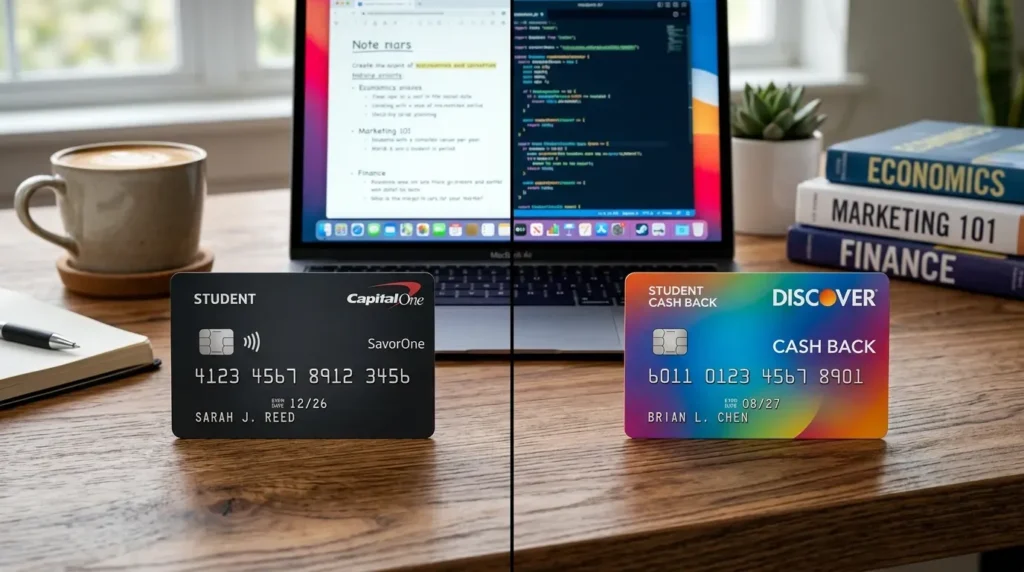
The approval process also sets these two giants apart for most Credit Card Novices entering the market. Discover remains a champion for Approval Accessibility for those with no credit history at all. Conversely, Capital One often looks for a Fair Credit Score (630-689) before they grant you an account. This means you might need to check your current status using a free tracking tool before submitting your official application to avoid a rejection.
| 2026 Detailed Comparison | Capital One Student Series | Discover it® Student |
| Annual Fee | $0 Cost | $0 Cost |
| Foreign Fees | None Charged | None Charged |
| Introductory APR | High Variable APR | 0% for 6 Months |
| Rewards Style | Flat Rate Rewards | Rotating Categories |
| Late Fee | Up to $40 | $0 First Time (Late Payment Forgiveness) |
| Best For | Simplicity and Travel | Maximum Cashback |
Capital One vs. Discover’s student cards: What’s the same
Both issuers recognize that students operate on tight budgets and need straightforward, cost-effective tools for growth. You will enjoy Zero Annual Fee Cards benefits regardless of which card you choose to carry on campus. This allows you to focus on learning Responsible Credit Management without worrying about a yearly membership cost eating your savings. It is a breath of fresh air to know that your card won’t cost you money just for sitting in your wallet.

Security and transparency are top priorities for both financial institutions as they support new cardholders. You get free access to your reports through digital tools to monitor your Credit Bureaus Reporting status regularly. Both cards also eliminate Foreign Transaction Fees, making them perfect companions for your summer study abroad trips. Whether you are buying tapas in Spain or coffee in London, you won’t see extra charges on your monthly statement.
Capital One vs. Discover’s student cards: What’s different
The primary distinction lies in the rewards mechanics and the effort required to maximize your earnings each month. Discover utilizes Rotating Categories that require quarterly activation, which might feel like extra homework for busy students. Capital One focuses on simplicity, offering Dining and Entertainment Rewards that apply to every single purchase you make without any extra steps. If you prefer a “set it and forget it” approach, the flat-rate card is definitely your best friend for daily life.

Wait times for your bonus cash also differ greatly between these two popular financial products. Capital One typically pays out your Sign-up Bonus vs Welcome Offer shortly after you meet the initial spending requirement. Conversely, Discover’s match happens only after your first year, serving as a lucrative long-term reward for patient savers. I find that some students prefer the quick $50 win while others enjoy a huge lump sum after twelve months of spending.
Which card should you get?
I believe your choice boils down to whether you prefer high-maintenance rewards or set-and-forget simplicity. If you love tracking trends and want the highest possible earnings, the Discover option is likely your winner. It rewards the strategic spender who utilizes Late Payment Forgiveness if they make a small mistake early on. This safety net is incredibly valuable for people who are just learning how to manage their first billing cycle correctly.

Students who value time and predictable outcomes should lean toward the Capital One options. These Zero Annual Fee Cards provide a steady stream of income on daily purchases without any quarterly hurdles. Pick the card that feels natural to your rhythm so you can focus on Credit History Building effortlessly. You want a tool that works for you rather than a card that requires constant attention and manual activations every few months.
Find the right credit card for you.
Finding the perfect fit involves looking at your current monthly budget and your future travel plans. You should check the Variable APR details to understand the cost of carrying a balance over time. This proactive step ensures you find the College Student Credit Cards that match your unique profile and spending patterns. Always remember that paying in full every month is the secret to winning the credit game and avoiding high interest costs.

Think about where you spend the most money, whether it is at the bookstore or local cafes. Selecting a card that matches your lifestyle makes Financial Literacy for Students feel like a rewarding game rather than a chore. I am confident that by comparing these cards, you are taking the right step toward Approval Accessibility. Your future self will thank you for taking the time to build a solid foundation while you are still in school.
Strategic Credit History Building for Success
Your ability to manage a small limit now dictates your ability to buy a house or car later. By utilizing College Student Credit Cards wisely, you demonstrate to lenders that you are an expert in your field. This journey starts with one single application and a commitment to paying your bill on time every month. Make sure you set up autopay to ensure you never miss a deadline and keep your score climbing higher.
Case Study: The Tale of Two Students
Imagine Sarah and Alex, both freshmen at a busy university in Texas. Sarah chooses the Discover card because she loves the Rotating Categories and shops at Amazon frequently during the holidays. She earns $300 in cashback by the end of the year, which Discover then matches to give her a total of $600.
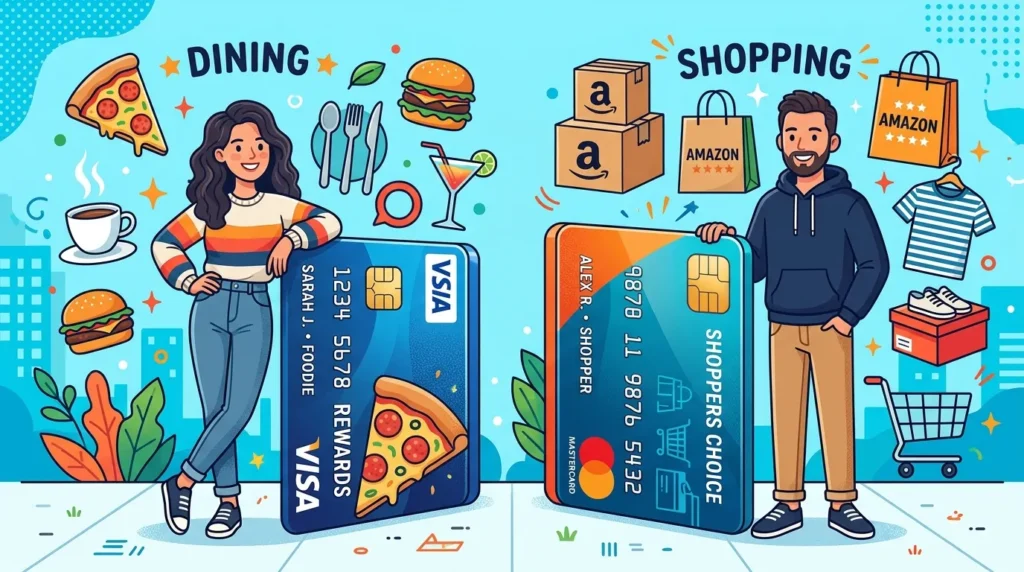
Alex prefers Capital One because he spends heavily on Dining and Entertainment Rewards while hanging out with friends. He gets his Sign-up Bonus vs Welcome Offer within the first two months and enjoys a simple 1.5% back on every single pizza order.
“The goal of a student card isn’t just the rewards, it’s the bridge to your financial future.” — Financial Expert Jae Bratton.
Frequently Asked Questions (FAQs)
Do I need a full-time job to apply?
You do not necessarily need a high-paying career to qualify for these Zero Annual Fee Cards. Issuers often accept independent income or even some types of financial aid as proof of Approval Accessibility for young adults. This flexibility helps students start their financial journey while still focusing on their academic studies.
Will applying for a card hurt my score?
A single application might cause a tiny, temporary dip in your Credit Bureaus Reporting data. However, the long-term benefit of Credit History Building far outweighs this small initial change as you prove your reliability over time. Consistent on-time payments will quickly erase any minor impact from the initial credit inquiry.
Can I change my student card later?
Most banks allow you to “graduate” your account to a standard card once you finish school. This transition helps you maintain your Fair Credit Score (630-689) history while gaining access to higher limits and even better premium rewards. Keeping the same account open is a smart way to lengthen your average credit age.
Is there a limit on the cashback match?
The Cash-back Match Intro Offer from Discover is unique because it has no maximum cap. You can earn as much as you want during the first year and they will double every single cent automatically. This feature provides incredible value for students who have large upcoming purchases for their dorm or school supplies.
What happens if I miss a payment?
Missing a deadline can lead to a high Variable APR being applied to your remaining balance. You should utilize features like Late Payment Forgiveness offered by some issuers to protect your growing score from a one-time mistake. Always strive to pay the full amount to avoid any unnecessary interest charges.